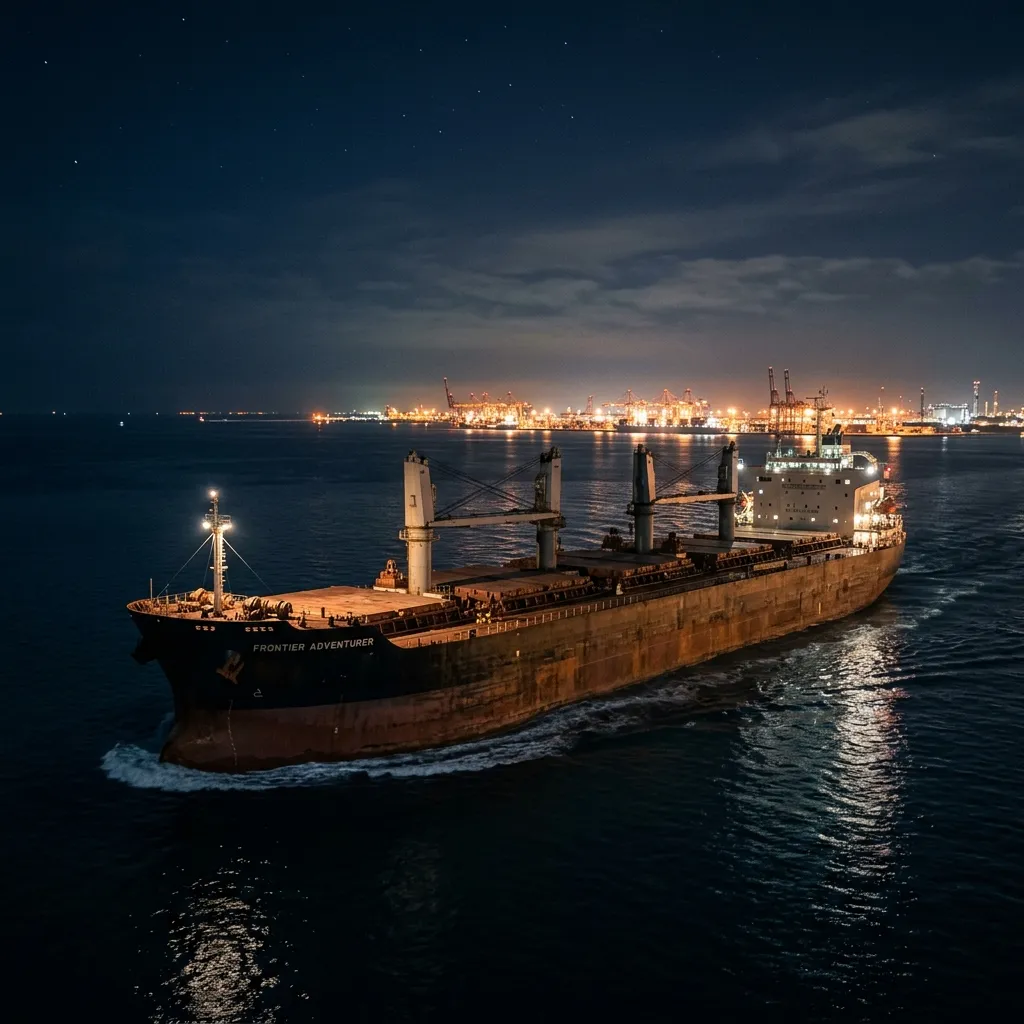
Following recent political escalations and temporary blockades in the vital shipping lanes near Iran, the global shipping community has witnessed significant shockwaves rippling through the dry bulk markets. The sudden volatility in the region has forced leading shipowners, charterers, and maritime insurers to swiftly reassess their risk margins and routing logistics across the entire Middle East Gulf.
At the center of the disruption is the coaster and handysize market. As regional powers continue to exchange fire and proxy tensions escalate along the Strait of Hormuz, vessels that traditionally operate along the Gulf pathways are being diverted or held at anchorage. In instances where vessels are circumventing the region entirely, adding considerable ton-miles to standard voyages around the Cape of Good Hope has become the new baseline.
The Politics Behind the Blockades
The geopolitical landscape of the war is severely complicating maritime law and freedom of navigation. Economic sanctions imposed by Western coalitions against Tehran are being strictly enforced, complicating ship-to-ship transfers and bunkering operations in previously safe zones. Furthermore, the persistent threat of drone strikes—driven by ongoing political instability and regional proxy conflicts—has drawn the attention of international navies, forcing commercial vessels to rely on heavily guarded naval convoys to transit high-risk waters.
According to a recently published report by SSY Global Research, war-risk insurance premiums have aggressively spiked over the last 48 hours. This has systematically squeezed the operational margins of shipowners despite stronger baseline freight rates. SSY notes that demurrage claims have also surged as port congestion consistently worsens at alternative transshipment hubs in neighboring, untargeted nations.
Strategic Realignment for Alcos Partners
For charterers heavily relying on Eastern trade corridors, this political uncertainty translates into a challenging Q2. Rates for trips from the US Gulf to the Far East have particularly firmed, forcing many to look at forward freight agreements (FFAs) to hedge their exposure.
We anticipate the market will find a volatile but manageable new equilibrium over the coming weeks as longer-term consecutive voyage contracts adapt to the extended transit times. The Alcos Research Desk, in conjunction with international maritime intelligence sources, continues to monitor the political situation closely. We are committed to providing real-time forward rate projections to ensure our partners remain securely navigated and positioned advantageously.